Humble Beginnings in the Volta Region
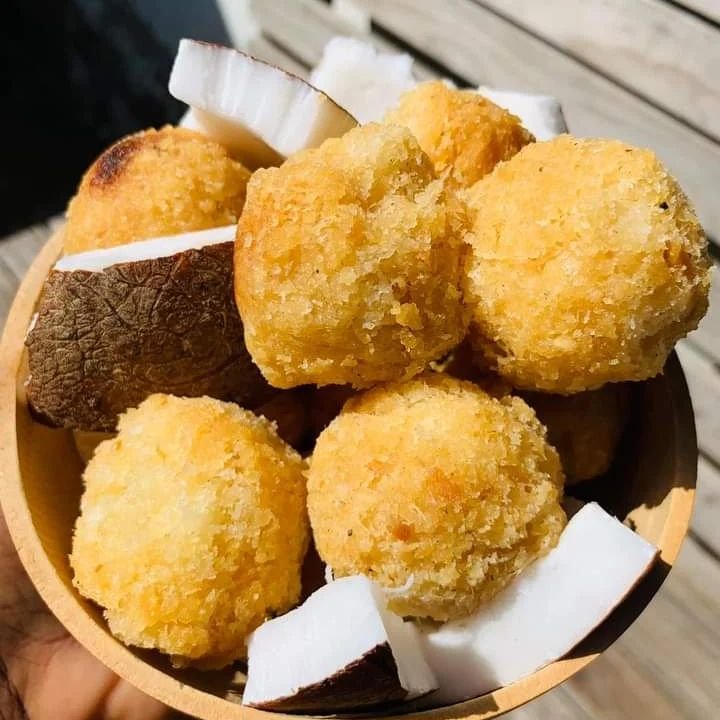
Long before the days of packaging and branding, Agbeli Kaklo was born in the kitchens of Ewe mothers and grandmothers in the Volta Region of Ghana. The name itself comes from the Ewe language — “Agbeli” meaning cassava, and “Kaklo” referring to a fried cake or ball. Together, it simply means “fried cassava ball.”
Cassava was a staple in Ewe households — versatile, resilient, and abundant. After harvest, the tubers were peeled, washed, and finely grated. Traditionally, the grated cassava would be left to drain overnight using woven baskets, and then carefully seasoned with salt, onion, and sometimes pepper. The resulting mixture was hand-molded into small rough balls and fried until golden brown in palm oil or groundnut oil.
Agbeli Kaklo wasn’t just food — it was a ritual of community and care. Elders would make it for children returning from school, or as a midday snack during farming breaks. It was often served with slices of fresh coconut, a contrast that balanced the snack’s crunch with natural sweetness and softness.
A Snack That Traveled by Word of Mouth
As Ewe families migrated to other parts of Ghana — from Ho and Kpando to Accra, Kumasi, and beyond — they brought Agbeli Kaklo with them. Its simplicity, taste, and affordability made it popular in schools, markets, bus stops, and roadside kiosks. You could hear the call of street vendors:
“Agbeli Kaklo! Warm Agbeli Kaklo! With coconut!”
Soon, it became more than just an Ewe delicacy — it was Ghanaian.
More Than Food — A Cultural Symbol
Agbeli Kaklo holds a special place in the cultural identity of the Ewe people. It’s a dish that celebrates:
Simplicity: Made with only a few ingredients, yet full of flavor.
Sustainability: Using locally grown cassava and traditional processing methods.
Sharing: Eaten in groups, often passed around during storytelling, festivals, or family gatherings.
It’s part of a broader culinary philosophy in Ewe culture — making the most out of what you have, with love, intention, and skill.
The Modern Era: Tradition Meets Innovation
Today, brands like AGBELI KAKLO we are giving Agbeli Kaklo snack a new identity — one that maintains the soul of the original but meets the demands of modern consumers. We’re using hygienic processing, quality packaging, and export-ready techniques to introduce this traditional snack to a global audience.
But the essence hasn’t changed.
When you bite into Agbeli Kaklo snack, you’re tasting generations of wisdom, culture, and craftsmanship. From the red earth of Ewe land to your hands — it’s more than a snack, it’s a heritage in every crunch.